
Blog

Gluten-Free questions, Uncategorized

Wheat or Gluten allergy, sensitivity, Dermatitis Herpetiformis or Celiac Disease?

There is a difference between Celiac disease, gluten allergy, and gluten intolerance or sensitivity.  It’s funny while preparing to write this, and the differences between these separate reactions to ingesting gluten, I realized I know several people who fall into each one of these categories.  Like so many things in life, people that eat gluten free cover a wide spectrum.  From those that choose the life style for personal reasons all the way up to those that have extremely severe reactions when the slightest cross-contamination occurs with gluten and their food.  

  • I have several friends that chose a gluten-free lifestyle not because of a medical diagnosis, but because of several seemingly unrelated symptoms they found eating gluten-free seemed to alleviate; such as, inflammation in their joints, continual fatigue, or even ADHD behavior and Autism.  There are a wide variety of symptoms that can be addressed by eating gluten-free.


  • Let’s move into actual allergic reactions.  They can be as mild as hives but can include people who have anaphylactic reactions to wheat.  Just like other allergies, it is individual and distinct for each person.


  • The same range exists within the group who suffer from Dermatitis Herpetiformis.  It resembles eczema, but in someone else may be misdiagnosed as herpes.  Similar to Celiac Disease, they can manage the symptoms by removing gluten from their diet.


  • The last group ranges from gluten or wheat-sensitive individuals to full-blown Celiac Disease.  It has always been believed that those with gluten or wheat sensitivity do not suffer damage to their small intestines.  In a July 2016 study however, researchers at Columbia University Medical Center released findings that, while inconclusive, showed gluten sensitive people may actually be damaging their small intestines in the same way as those with Celiac Disease, but to a lesser degree. Gluten sensitivities can manifest themselves in so many different symptoms that they may not even seem to be connected to your diet. If you have symptoms such as diarrhea, nausea, or migraines after eating breads or pasta you would probably make the connection but if you become moody or your joints ache you might not.  These symptoms can all be related, making the correlation, though, takes some medical testing to know for sure. A way to be proactive would be to keep a food and symptom journal prior to seeing your doctor. You will need to continue to eat gluten until those tests though, otherwise your problems don’t show up in your blood work.

Whether you are trying out a gluten-free diet to see if it fits into your lifestyle, have allergies, sensitivities, Celiac Disease or Dermatitis Herpetiformis-no matter your reason for eating gluten-free, our hope is to show you that this lifestyle does not have to inhibit your life, but can become an adventure! 

Gluten-Free questions, Uncategorized

What is Celiac Disease?

“What’s Celiac Disease?”  If you have Celiac, you probably get asked this question often too!  Since I have been at this for a while, I’ll give you my spiel, then I’ll share the technical definition from Celiac.org, let’s see how close I get!  Here’s my response:

Celiac Disease is an autoimmune disorder that affects my small intestine when I ingest gluten.  Gluten is found in: wheat, rye, barley, some oats, and many things derived from them. (A hidden example would be modified food starch.) Inside your small intestine are villa (think ocean plankton or, typically I wave my fingers slowly to demonstrate) that help your body absorb nutrients and vitamins.  Since I have Celiac, when I eat something with gluten, I get very sick for several days, damage the villa, and basically make it harder for my body to absorb necessary nutrients and vitamins.

Ok so here is the definition found on the Celiac.org site:

Celiac disease is a serious autoimmune disorder that can occur in genetically predisposed people where the ingestion of gluten leads to damage in the small intestine. It is estimated to affect 1 in 100 people worldwide. Two and one-half million Americans are undiagnosed and are at risk for long-term health complications.

When people with celiac disease eat gluten (a protein found in wheat, rye and barley), their body mounts an immune response that attacks the small intestine. These attacks lead to damage on the villi, small fingerlike projections that line the small intestine, that promote nutrient absorption. When the villi get damaged, nutrients cannot be absorbed properly into the body.

Celiac disease is hereditary, meaning that it runs in families. People with a first-degree relative with celiac disease (parent, child, sibling) have a 1 in 10 risk of developing celiac disease.

Read more at Celiac.org

Ok-so I may not have been as technical-but I was pretty close! 😉 So hopefully that helps answer any questions you have.  Again if you have further questions I have found Celiac.org to be amazingly helpful!

Uncategorized

My Can’t-Live-Without Gluten-Free Baking Tools

So I feel bad I haven’t been able to post in a while, I’ll try to make up for it now.  While there are several things that kept me away from the blog, one of the main reasons was I was in the kitchen.  I just turned in a manuscript for a gluten-free cookbook!  My mom and I have been taking some of our family favorite gluten containing recipes and finding ways to make them gluten-free.

I try really hard to use what I have, but I found there were some instances that buying the right tool for the job, made a big difference.  Please know I do not take these recommendations lightly. When I first was diagnosed, I read several different cookbooks, online sources, and dietician suggestions that insisted all new baking tools and baking novelty appliances were necessary to live gluten-free.  I do not totally agree-but here are items have found helpful.  It was a long process to discover what tools were needed and which ones to use.  I’ll include some reference pictures and links to hopefully make your search a little easier.

Remember it has to work for you and your baking lifestyle.


  • Food Scale
    • One of the only new items I purchased when we began working on the recipes it helps when converting your family favorites.
    • The one I linked here is the newer model of what I have.  Wouldn’t you know it, just a few days after I bought mine, it was clearanced out!
  • Screen Shot 2017-09-16 at 5.39.48 PMPlastic cutting boards and spoons
    • Your previously used wooden spoons and cutting boards actually trap gluten! Out with the old, in with the new!
    • I feel like you can find these anywhere.  Make sure the cutting boards are dishwasher resistant and strong enough to last a while.  I also label my cutting boards so I know what food is prepared on it. (poultry, produce, fish, meet, bread etc.)
  • Mini Food processor (suggested)
    • Fantastic for making salsa, sauces and pesto!
    • This is the one I have that I love!
  • Stand and/or hand Mixer (suggested)
    • I love my stand mixer and have had it for years, if you don’t, your hand mixer will be perfect!
  • Toaster Bags
    • Great for keeping your toast, sandwiches, and other items gluten-free but toasty warm! I already shared about what a revelation these were to my life in another post-for more of the story check it out!
  • Foil Muffin tin liners rather than paper Screen Shot 2017-09-16 at 5.30.14 PM
    • As we said before gluten-free baked goods tend to be moist and sticky we have found the foil muffin “papers” sprayed with a GF non-stick spray work best for gluten free muffins and cupcakes-and they look pretty too!
  • Parchment Paper
    • Helps to keep your gluten-free baking from burning too quickly
  • Gluten-free griddle
    • This does not have to be huge, only use gluten-free recipes with this griddle.
GF LIFE HACKS

My #1 Secret Hack for Avoiding Gluten Cross-Contamination!

Most people don’t realize one of the major sources of cross-contamination in their kitchen is their toaster!  Think about it, if you are moving your kitchen over from 100% gluten to gluten free there are so many things you have to buy-food, baking utensils, who wants to, or has the money to buy a new toaster?  Or if you live in the real world, like we do, the majority of the family is not gluten free, but I am.  And quite honestly it is just too expensive to buy gluten free for everyone, I’ve tried and the kids don’t mind it, but it’s just not affordable.  So you could do several things;

  1. Give up toast.
  2. Buy two toasters
  3. Make the gluten eaters give up toast

I don’t know about you, but those don’t really work for me!  So one day while I was exploring ways to get one of my favorite gluten free brands online (otherwise I had to drive 1/2 an hour away to get it) I discovered these!  I have to say it was one of the most liberating days in my gluten free journey!

Screen Shot 2017-09-16 at 10.13.12 AM

Toaster Bags!  I had never heard of them before!  It was amazing!  I can still use a toaster that all those other gluten eaters around me use, but I won’t get sick!!!!  So here’s some of my favorite features about them!

  1. They are reusable!!!
  2. They are very inexpensive!
  3. You can toast; sandwiches, pizza, make grilled cheese, bagels, waffles, and moreAND it doesn’t make a mess!
  4. Dishwasher safe
  5. Transportable

I pack my bread for my sandwich in it for work and sandwich fixings separately.  I put my tuna melt together at work, put it back in the toaster bag and use the toaster at work.  Voila-I have a safe for me sandwich, the mess is contained and the bag can be thrown in the dishwasher and used again!

Here is a link for the toaster bags that I use.  The bags are good for roughly 50 uses, or when you start to notice excessive wear.

I love this hack, it has made my gluten free life so much easier!

GF LIFE HACKS

GF Life Hack #7

One of the great things about becoming gluten free is the discovery of your favorite new gluten free bread. (I understand that if you didn’t have to live gluten free you wouldn’t have to find a “favorite new gluten free bread”, but the fun is in the discovery.). The bread that you can make sandwiches with, and take for lunch to work or school so you almost feel normal. Something to toast for breakfast or make garlic bread with on Italian dinner night.

I have discovered my new favorite several times since I’ve been diagnosed with Celiac Disease. Each time there have been very similar downsides to my the new favorite. I have found that most gluten free breads either dry out quickly or can mold just as quickly. It is so frustrating to spend extra money to eat gluten free just to throw it away.  It has caused me years of trying to figure out a solution. Some breads freeze well, but then you have to think ahead to thaw it out. Another problem with freezing besides planning ahead is that unless it’s completely thawed out the bread breaks apart and is no longer big enough for your sandwiches.

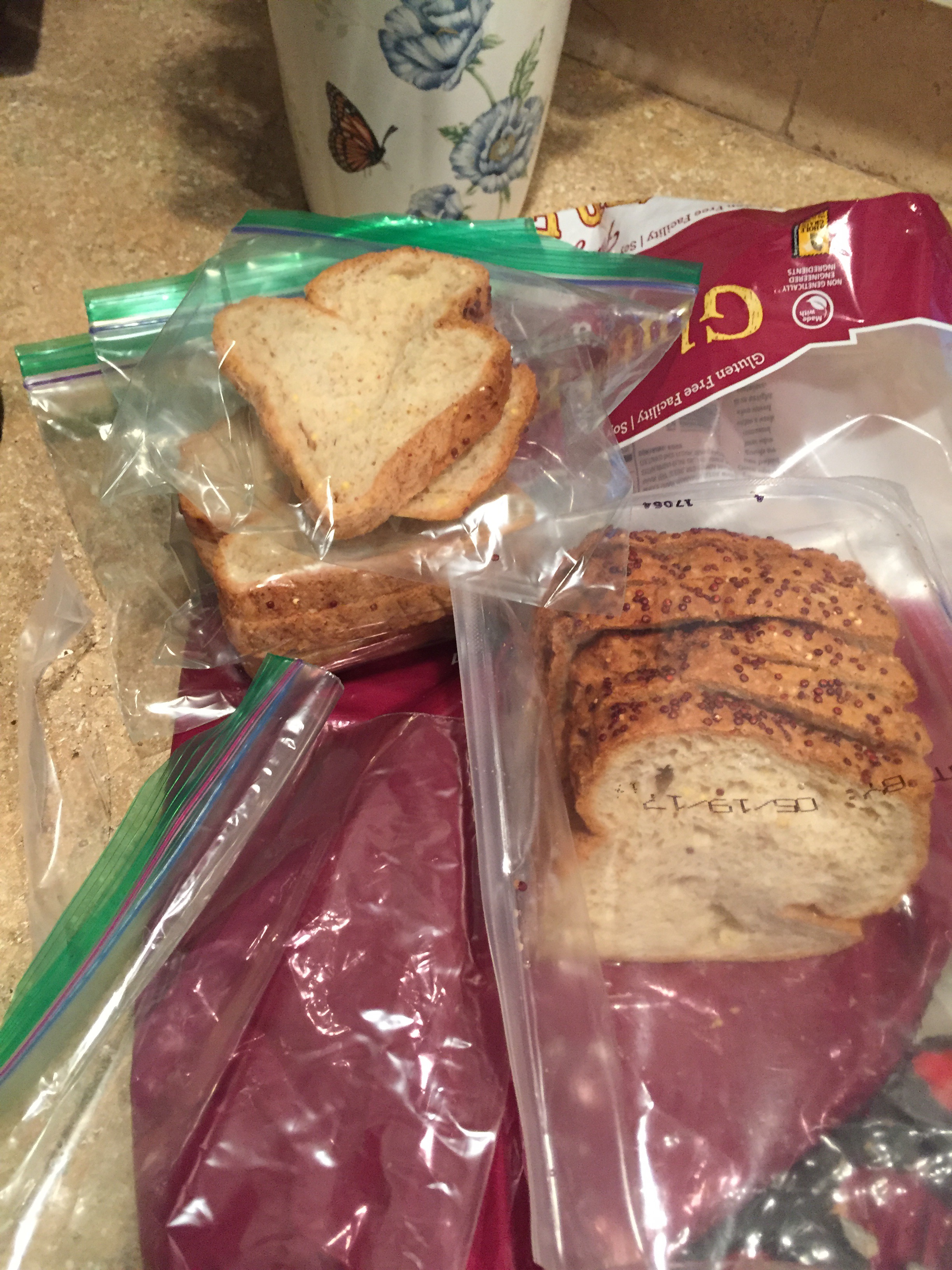
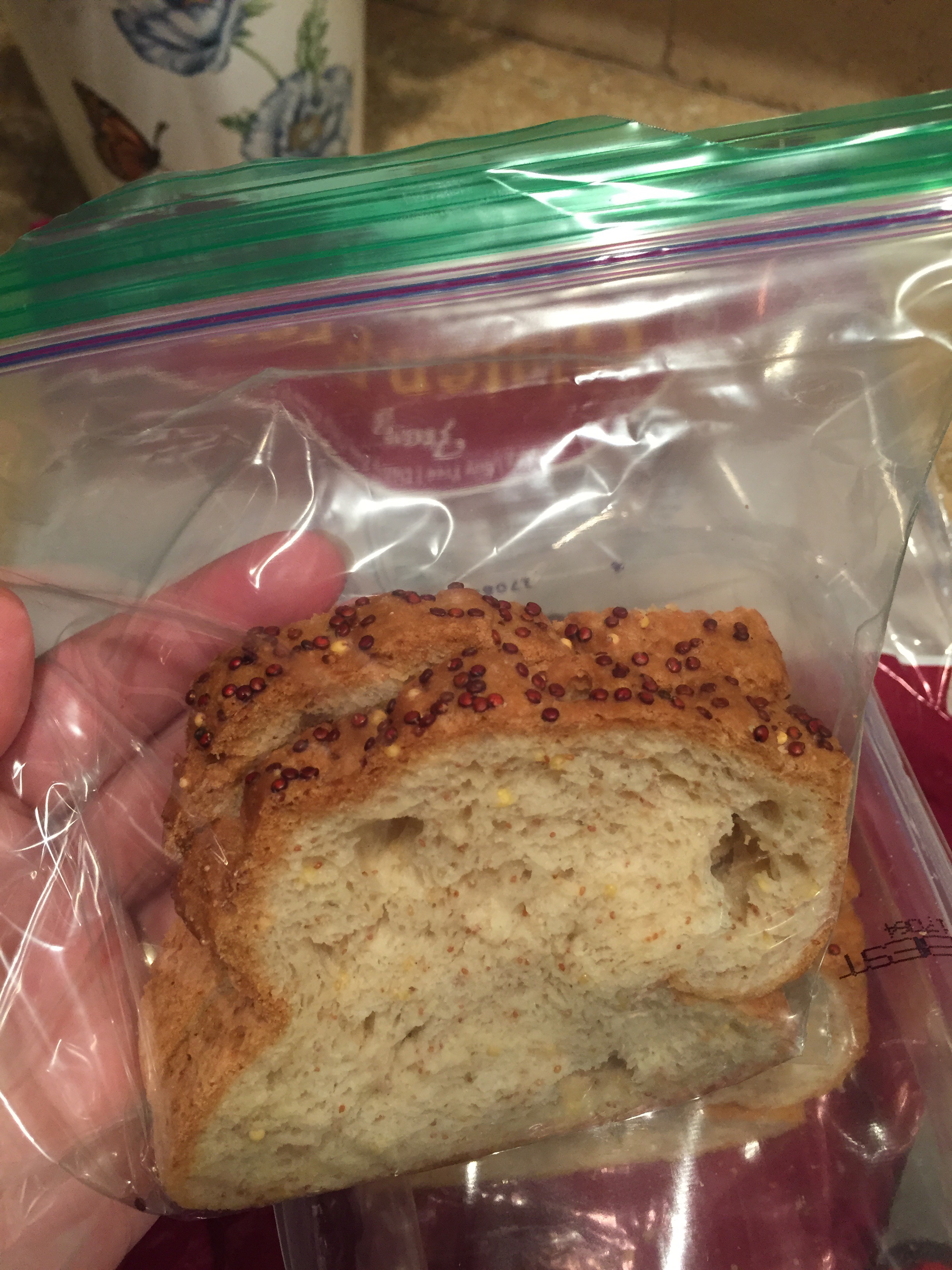
So I came up with an idea that I am completely excited about and I can’t believe it took me so long to think of! It’s so simple it’s ridiculous. My gluten free hack for dealing with gluten free bread is to package serving sizes in ziplock bags. What I love about this is when I need bread for my lunch I just grab a ziplock baggie out, throw it my lunch box with my sandwich fixings and make my sandwich at work.


I’m sure you probably already came up with this hack- but just in case you didn’t…

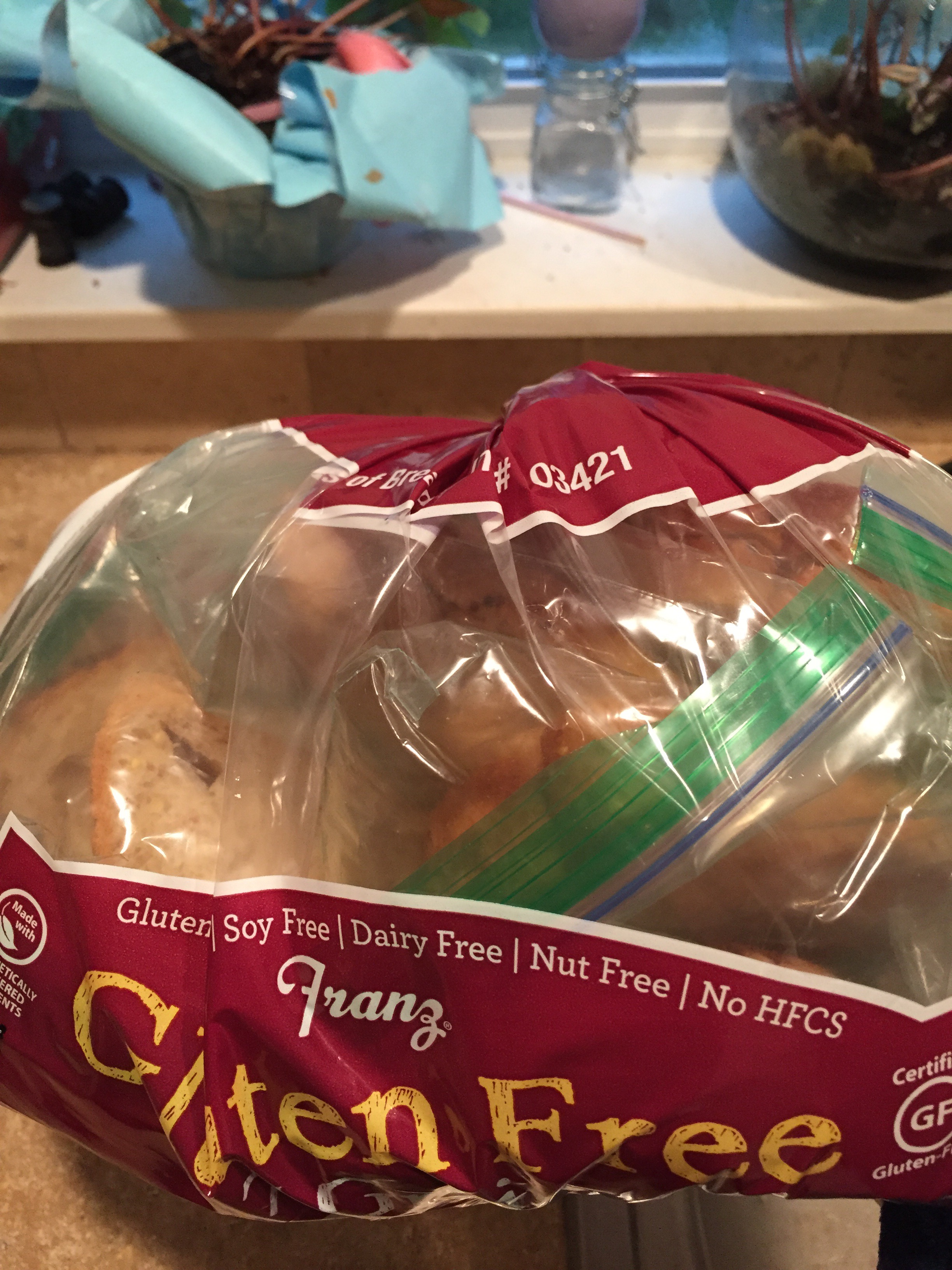
And yes- my new favorite is Franz gluten free bread! 😊